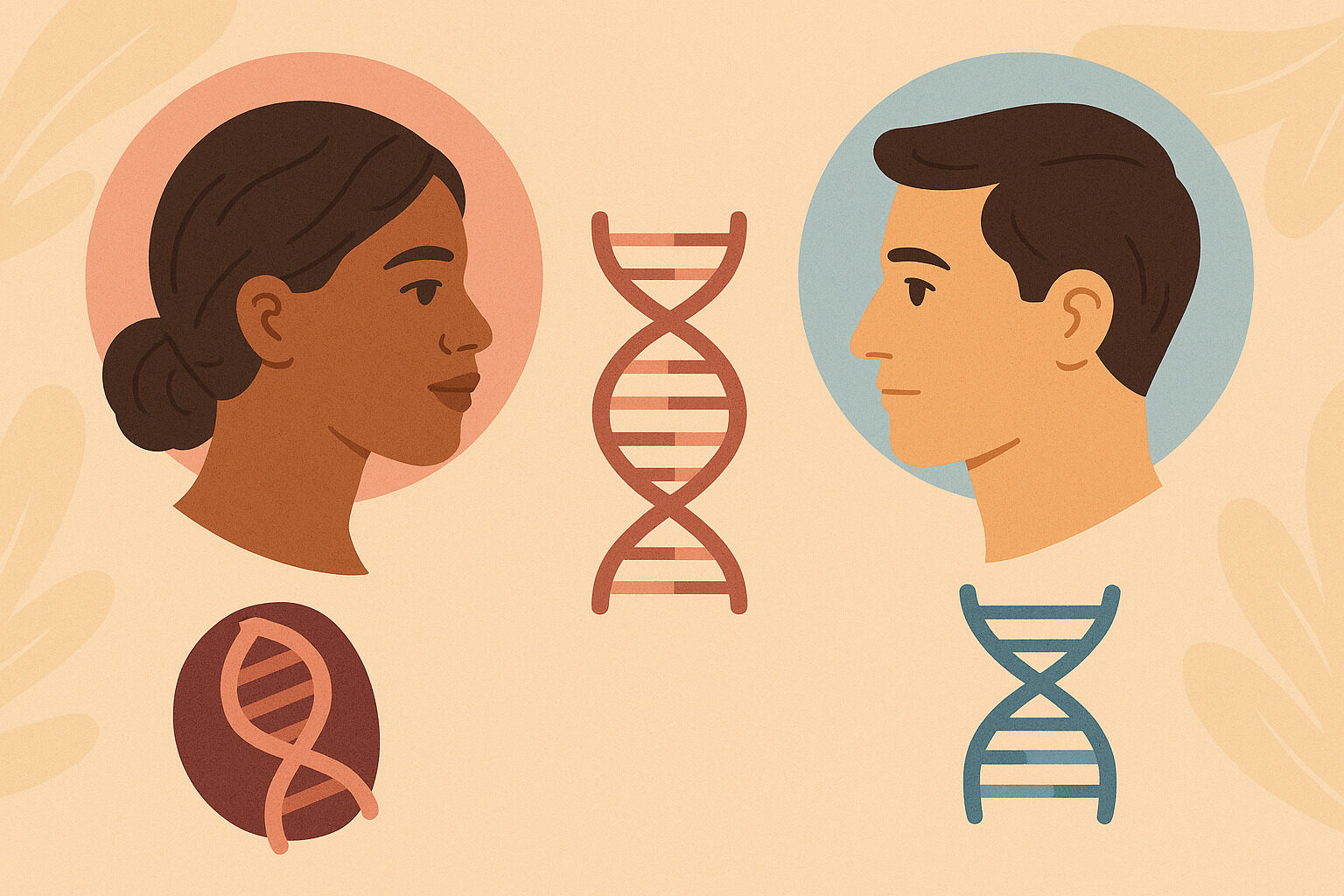
If you have ever wondered where your ancestors came from, mtDNA and Y-DNA tests offer two different paths into your family story. One path follows your mother’s mother and keeps marching along the maternal line, while the other traces your father’s line. Both tests can add depth to your family tree, and when used together with autosomal DNA they create a more complete map of your origins and even clues about health and well being. In this guide we break down how mtDNA and Y-DNA work, what they can and cannot tell you, and how to decide which test fits your goals.
mtDNA and Y-DNA explained
What is mtDNA
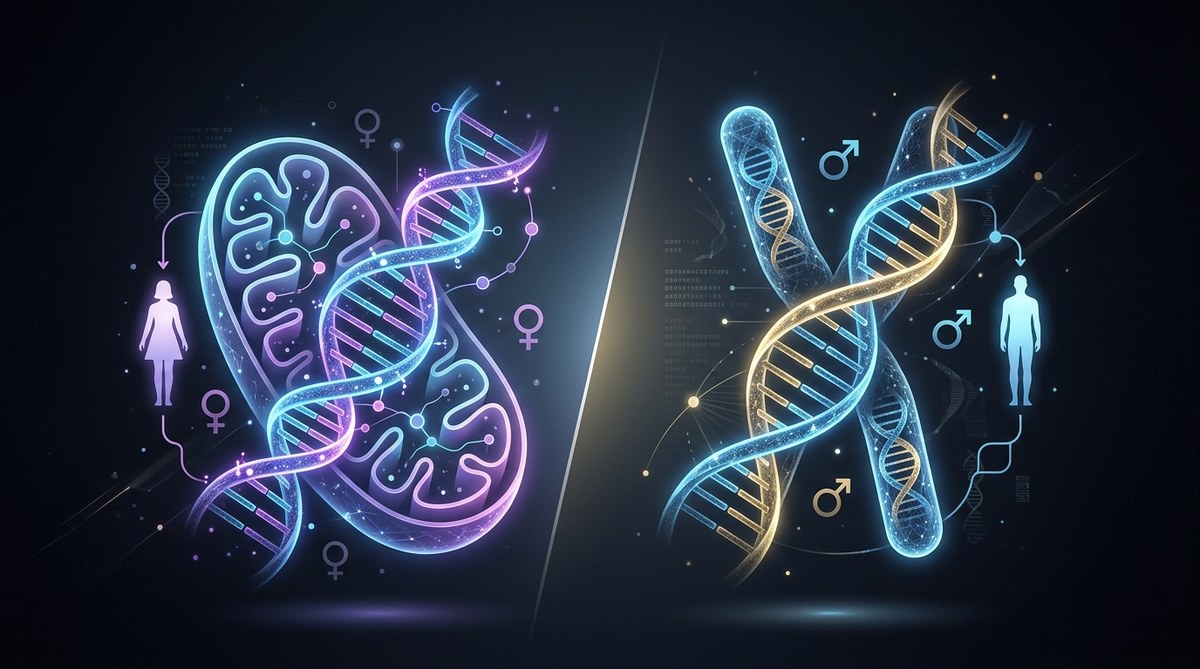
Mitochondrial DNA, or mtDNA, lives in the mitochondria within cells. Unlike the DNA found in the nucleus, mtDNA is inherited almost unchanged from mother to child. Because every person gets their mtDNA from their mother, it creates a direct maternal line that can be traced far back in time.
Key points about mtDNA:
– It is inherited from the mother to all her children, but only daughters pass it on to the next generation, making a matrilineal family line.
– mtDNA changes slowly over generations, which helps researchers look further back in time.
– The test typically focuses on mitochondrial DNA variants and haplogroups, not on the entire mitochondrial genome unless you opt for full mtDNA sequencing.
– It is especially useful for tracing ancient maternal ancestry and for studying population movements over thousands of years.
What is Y-DNA
Y-DNA comes from the Y chromosome, which is present only in people assigned male at birth. Since the Y chromosome is passed almost unchanged from father to son, it provides a male line of descent.
Key points about Y-DNA:
– It traces the paternal line from father to son and is only available if you test a male or a male relative who shares that line.
– Like mtDNA, Y-DNA changes slowly, but its mutations accumulate in ways that help map more recent to ancient paternal lineages.
– Y-DNA results are often presented as haplogroups that map to geographic and historical patterns of male ancestry.
– It is particularly informative for reconstructing recent to ancient paternal family stories and for understanding regional origins of the male line.
How these tests are inherited
Mitochondrial inheritance patterns
- Every person receives their mitochondria from their mother.
- Only daughters pass mtDNA to the next generation; sons do not pass it on.
- Because the mtDNA line is not shuffled every generation, it acts like a single branch of your family tree that can extend far back in time.
Y chromosome inheritance patterns
- The Y chromosome is transmitted from father to son.
- It remains relatively stable across generations with occasional mutations that create new haplogroups.
- If you are not male or do not have a direct male paternal line to test, you may need a close paternal relative to gain Y-DNA insights.
What you will learn from each test
From mtDNA you will learn
- The maternal lineage deep into the past, sometimes revealing ancient migrations or settlements.
- The mtDNA haplogroup which can be linked to broad geographic regions and population histories.
- Clues about maternal ancestry that complement other genetic sources.
From Y-DNA you will learn
- The paternal lineage deep into time, revealing how paternal ancestors moved and mixed across regions.
- The Y-DNA haplogroup which guides you toward the geographic origin of male ancestors.
- Insights into surname traditions and male line connections when combined with genealogical records.
Strengths and limitations
Strengths
- Deep time perspective: Both mtDNA and Y-DNA can reach far back and reveal lineages that autosomal DNA cannot resolve.
- Clear maternal or paternal lines: These tests provide a focused view on one branch of your family tree.
- Geographical inference: Haplogroups offer hints about where ancestral populations once lived and moved.
Limitations
- Narrow scope: They cover only one line of your ancestry each and do not reflect your entire family story.
- Limited health information: Most mtDNA and Y-DNA tests are genealogy centric, not comprehensive health assessments.
- Testing gender constraints: Y-DNA requires a male tester or a male relative along the paternal line to the extent you want to trace that line.
- Resolution varies: Some haplogroups are broad and can be less informative about recent ancestry compared to autosomal or X-DNA data.
How to use mtDNA and Y-DNA with autosomal DNA
- Combine multiple sources: Use mtDNA and Y-DNA to anchor maternal and paternal lines, then fill in gaps with autosomal DNA which reflects the mixed heritage from all ancestors.
- Build a timeline: Haplogroup information can be used with historical records to construct a timeline of migrations and settlements.
- Cross verify findings: If autosomal matches point to a region, mtDNA and Y-DNA can help validate whether your maternal or paternal lines align with those geographic sources.
- Complement with family records: Use genealogical documents alongside genetic data to trace branches that match your genetic signals.
Choosing the right test for your goals
- If your goal is to understand deep maternal lineage and ancient population movements, mtDNA testing is a strong choice.
- If you want to map the direct paternal line and you have access to a male on that line, Y-DNA testing is ideal.
- If you are pursuing a broad sense of ancestry and health insights, you may want to include autosomal DNA testing as part of your strategy.
- For those with limited access to a paternal male line, there are alternative approaches such as testing a close male relative or using advanced autosomal analyses to infer paternal connections.
Practical steps to get started
- Define your goals:
- Do you want to explore maternal heritage or paternal lineage or both?
- Are you primarily curious about ancient migrations or more recent family connections?
- Check your gender and resources:
- If you are male or have a direct paternal male relative available, Y-DNA is a viable option.
- If you want to keep tracing a mother line, mtDNA is accessible regardless of gender.
- Decide on the depth of testing:
- For most hobbyist genealogy, haplogroup level tests work well.
- For deeper insights, full mtDNA or Y-DNA sequencing may be worth the investment.
- Plan how to integrate results:
- Prepare a simple family tree and a list of known relatives who share lines you plan to explore.
- Create a workflow to compare mtDNA and Y-DNA results with autosomal matches you already have.
- Prioritize privacy:
- Review consent options and data sharing settings on testing platforms.
- Consider how you want to share or keep your results with family members.
Health and well being connections
- mtDNA can inform on energy production pathways and mitochondrial function, which are linked to metabolism and aging processes.
- Certain mtDNA variants and haplogroups have been studied in relation to disease risk, longevity, and responses to environmental stressors. However, keep in mind that many health associations are population based and require further validation for individual health decisions.
- Y-DNA can provide context about paternal ancestry and regional genetics, which may intersect with population level health trends. Yet it is not a stand alone predictor of health outcomes for an individual.
- For personalized health plans, pair mtDNA and Y-DNA insights with autosomal DNA data and lifestyle factors such as diet, exercise, sleep, and stress management.
Important note: While genetic information can empower you to tailor wellness strategies, it should not replace professional medical advice. Use genetic insights as one part of a broader health plan that includes clinician guidance and evidence based lifestyle choices.
Privacy and ethics
- Your genetic data is sensitive information. Review a testing company’s privacy policy, data sharing options, and consent terms before you enroll.
- Consider whether you want to participate in third party data sharing programs or research studies.
- If you share results with family, discuss potential implications for relatives who share these lines.
Frequently asked questions
Do mtDNA and Y-DNA tests tell me about health
In general, mtDNA and Y-DNA tests focus on ancestry and lineage. They are not comprehensive tools for diagnosing health conditions. Some studies connect certain haplogroups with population level trends but these are not precise health predictions for individuals. For personal health planning, rely on clinical tests and consult healthcare professionals.
Can mtDNA or Y-DNA pinpoint my exact origin
These tests provide geographic and population level signals rather than exact locations or names. They can indicate probable regions or lineages in deep history, but precise origin stories require corroborating genealogical records and autosomal data.
Is the test gender dependent
mtDNA works for everyone because it follows the maternal line. Y-DNA requires a male tester or a close male relative to reveal the paternal line, as the Y chromosome is present only in males.
How should I interpret haplogroup results
Haplogroups map to historical populations and geographies. They reveal broad patterns rather than a precise modern day location. Use haplogroup information alongside documentary genealogies and autosomal matches to enrich your story.
Should I run mtDNA and Y-DNA at the same time
If you want both patrilineal and matrilineal perspectives, testing both can be informative. Keep in mind cost and the need for a male for Y-DNA if you do not have one available in your family.
Bringing it all together
mtDNA and Y-DNA offer complementary windows into your family story. By focusing on maternal and paternal lines respectively, these tests fill in gaps that autosomal DNA alone cannot cover. For readers of idna.works who are passionate about decoding their genes to improve well being, combining mtDNA or Y-DNA insights with autosomal results and healthy living choices can create a richer, more actionable view of your ancestry and its possible influence on your health today.
If you are ready to embark on this journey, start with a clear goal, choose the test that fits your family structure, and plan a strategy to weave together time tested genealogical records with modern DNA science. Your roots are waiting, and a well designed approach can help you trace them with confidence while supporting your overall wellness journey.